
Scope is not size
A "specialised" market has fewer categories, not fewer listings. The narrowest scopes here — cannabis-only, single-region — are the ones that persist longest.
Every entry below is described the same way — launch year, settlement rail, escrow implementation, scope and the vendor rule that best distinguishes it. Reading the same fields across eight platforms is the only honest way to compare them. No onion address appears on this page.
A "specialised" market has fewer categories, not fewer listings. The narrowest scopes here — cannabis-only, single-region — are the ones that persist longest.
BTC rails are convenient and traceable. XMR rails raise the analysis cost for everyone downstream, including the operator who has to convert to pay vendors.
2-of-3 removes operator custody but adds a buyer-side key you can lose. Two markets here require it; the rest keep classical escrow with a dispute queue.
Listed alphabetically by domain of activity, not ranked. Each card links to the full encyclopedic entry.
2022. Monero-only settlement, classical escrow and 2-of-3 multisig, enforced vendor PGP, interface that stays usable with JavaScript off.
2022. BTC and XMR rails, escrow plus multisig option, mirror ring larger than the cohort average, canary re-signed after each incident.
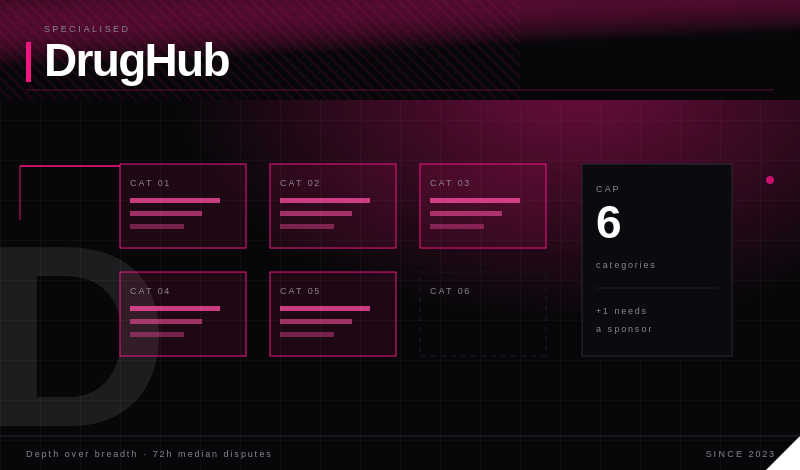
2023. Monero-only, deliberately narrow catalogue with deeper stock per category. Classical escrow, dispute-first vendor culture.
2021. Canada-first inventory, bilingual EN/FR interface, BTC and XMR. Referenced in Canadian national press and RCMP commentary.

Cannabis-only specialty shop with the narrowest inventory on this list and, consequently, the shortest dispute tail. Classical escrow.
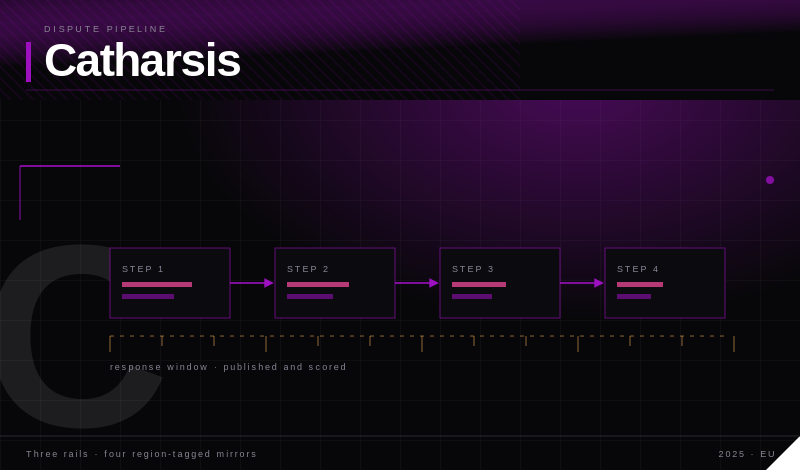
2025. EU-corridor routing, three settlement rails, a written dispute pipeline with response deadlines, canary on a fixed cadence.

2025. XMR-native from first commit rather than retrofitted, documented three-mirror ring, monthly signed canary, flat fee schedule.

Retired 2026. Short-lived mid-sized platform that closed without an exit statement — useful as a baseline for what a clean shutdown looks like.
Payment and scope figures are each market's own published rule, reproduced for comparison. Rules change; every article carries a revision date.
| Market | Launched | Settlement | Escrow | Scope | Distinguishing rule |
|---|---|---|---|---|---|
| BlackOps | 2022 | XMR | Escrow + 2-of-3 | General | Vendor PGP keys cannot rotate unverified |
| Torzon | 2022 | BTC + XMR | Escrow + 2-of-3 | General | Canary re-signed after every incident |
| DrugHub | 2023 | XMR | Classical escrow | Specialised | Category count capped by design |
| WeTheNorth | 2021 | BTC + XMR | Escrow + 2-of-3 | Canada corridor | Bilingual listing metadata |
| CannaExpress | mid-2020s | BTC + XMR | Classical escrow | Cannabis only | Cultivar-level listing granularity |
| Catharsis | 2025 | BTC + XMR + LTC | Standard escrow | EU corridor | Published dispute response deadlines |
| Omega | Feb 2025 | XMR | Standard escrow | General | Flat fee schedule, no tiering |
| DarkMatter | mid-2020s | BTC + XMR | Escrow + 2-of-3 | General | Closed silently in 2026 |
Six of the eight entries constrain either their category list or their geography. That inversion — specialty over supermarket — is the clearest structural break from the AlphaBay era, and it is not ideological. A narrow catalogue is cheap to moderate, cheap to mirror and easy to describe in one line on a forum thread. The failure mode that killed the giants, a sprawling listing base that vendors could stuff, is simply not available to a shop with nine categories.
Four of eight accept only Monero. In 2016 that would have been commercially suicidal; by 2023 it reads as a filter that removes the casual buyers who file the noisiest disputes. The trade is explicit: fewer inbound orders, better-funded ones, and no exposure to chain-transparent address clustering at deposit time.
The two markets offering 2-of-3 are both from 2022 and both mid-sized. Newer platforms tend toward classical escrow with a written dispute queue, because multisig adds a buyer-side key-loss problem that support staff cannot resolve. The escrow reference covers both models and the specific ways each one is abused — see the mechanics page.
The directory names the differences; the escrow reference explains what they cost you in practice — from FE deadlines to arbiter selection.
Escrow reference FAQ