
A market is a trust broker
It does not sell goods. It sells a dispute procedure, and every feature it ships exists to make that procedure believable to two parties who cannot see each other.
Dark Web Wiki is an ad-free reference to the markets that survived the post-Hydra shakeout — their launch conditions, payment rails, escrow models and vendor rules — plus first-principles notes on Tor, multisig and Monero. The core rule: not one onion address is reproduced here, so a clone cannot use this site as a phishing ladder.
It does not sell goods. It sells a dispute procedure, and every feature it ships exists to make that procedure believable to two parties who cannot see each other.
JavaScript, persistent logins and one-click wallets all shorten the path between a clone's page and your key material. Markets that strip them trade friction for survivability.
Uptime proves nothing about solvency. Canaries, signed mirrors and short finalisation windows are the only public signals an operator can actually be held to.
The operational-security archetype of the cohort: Monero-only settlement, a server-rendered interface that stays usable at Tor Browser's Safest level, and vendor PGP keys that cannot be rotated without re-verification. Its listing policy is narrower than its category; its bond forfeiture rules are unusually specific.
Composition of the directory, not a ranking. Specialisation outnumbers generalists roughly two to one in the current cohort.
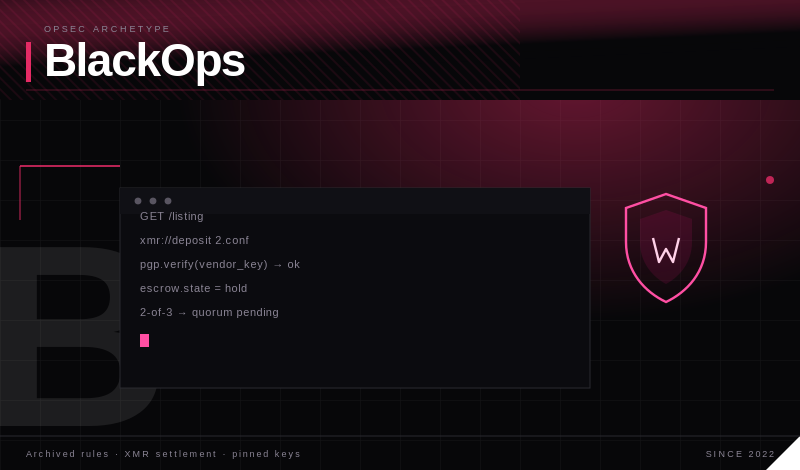
Monero-only, no-JS interface, enforced vendor PGP. The opsec archetype of the cohort.
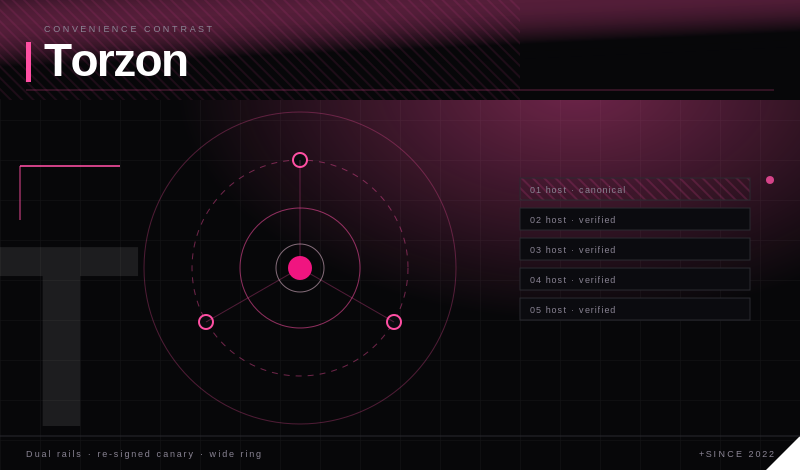
Multi-coin settlement, wide mirror ring, signed canary. The convenience contrast to BlackOps.
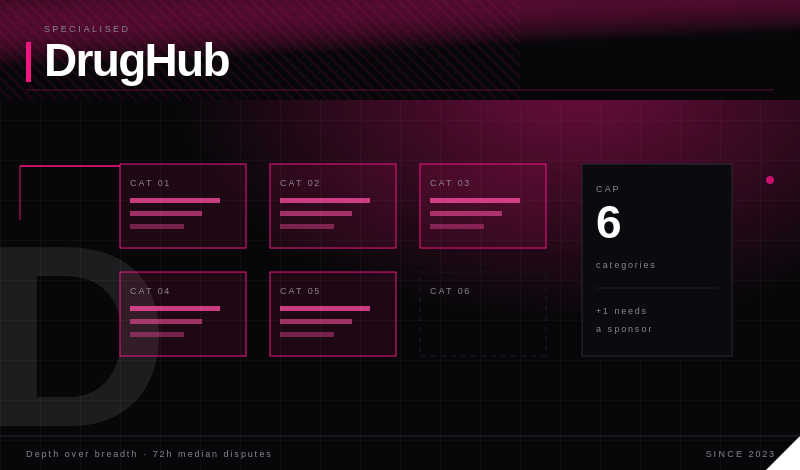
Monero-only and deliberately narrow: fewer categories, deeper stock per category.
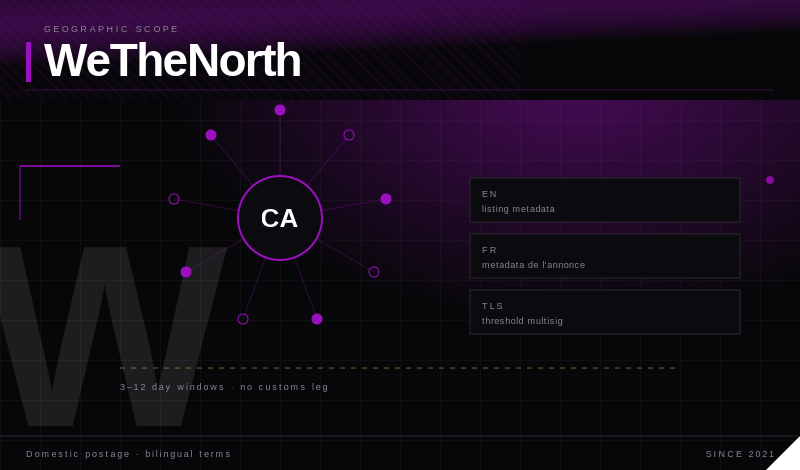
Canada-first catalogue, bilingual EN/FR, referenced in Canadian press coverage.
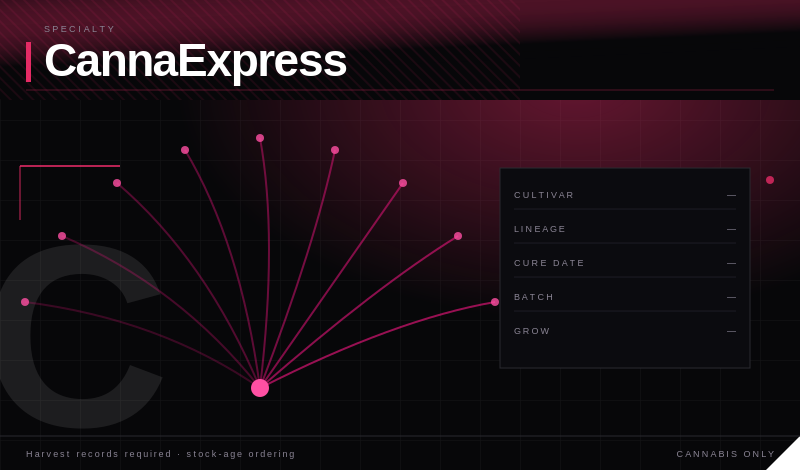
Cannabis-only specialty shop. The narrowest inventory and the shortest dispute tail.
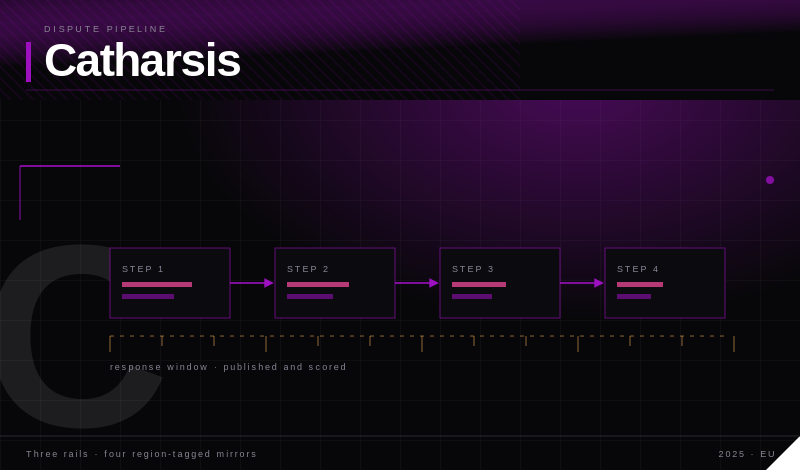
EU-corridor routing, three payment rails, a documented dispute pipeline.

XMR-native from commit one, not retrofitted. Monthly canary, flat fee schedule.
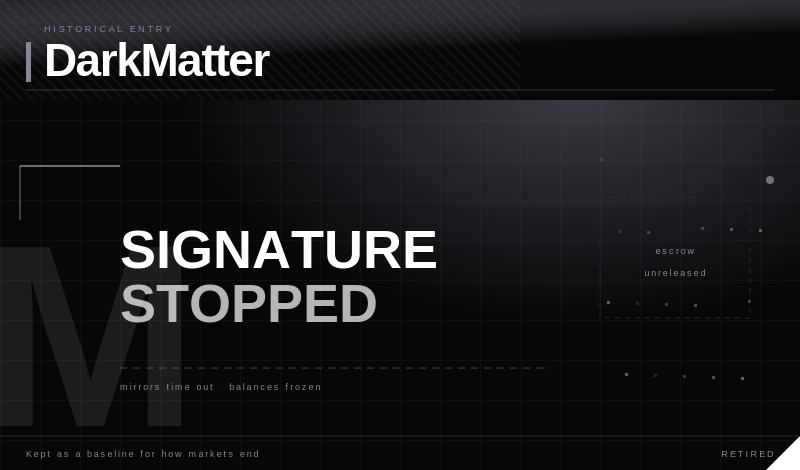
Retired in 2026 without an exit statement. Kept as a historical entry.
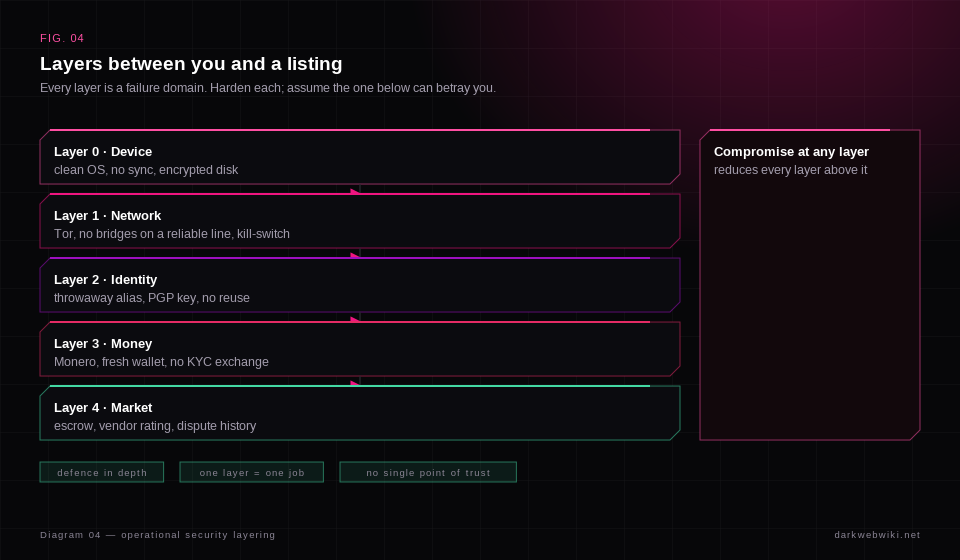
The through-line is not technological. Each seizure followed an operational mistake made off-network — a reused address, a server reachable from a home line, a co-operator who talked.
The directory covers history, escrow implementation, vendor policy and the mirror model of each entry. The reference section explains the mechanics the entries keep referring to.
Directory Escrow reference